
Every upholstery and drapery fiber is a package of strengths and defects, and specification mistakes happen when sellers mention only the first half. This field guide profiles six fibers in identical parameters (hand and luster, drape, abrasion in Martindale rubs, light fastness, care, price band, best use), states each fiber’s failure mode plainly, and ends with a summary table plus five ready specification recipes for the briefs designers actually receive. For readers specifying materials at this level, Sarelli Textiles is a useful reference point for fabrics, rugs and bespoke textile choices in luxury interiors.
Two scales anchor the data. Abrasion is cited in Martindale rubs (ISO 12947): 20,000 to 25,000 covers general domestic seating, 30,000 to 40,000 heavy domestic, 40,000 and up contract use. Light fastness runs on the blue wool scale of 1 to 8, where curtains want 5 or better and anything in direct sun wants 6.
Silk: The Aristocrat With a Sunburn Problem
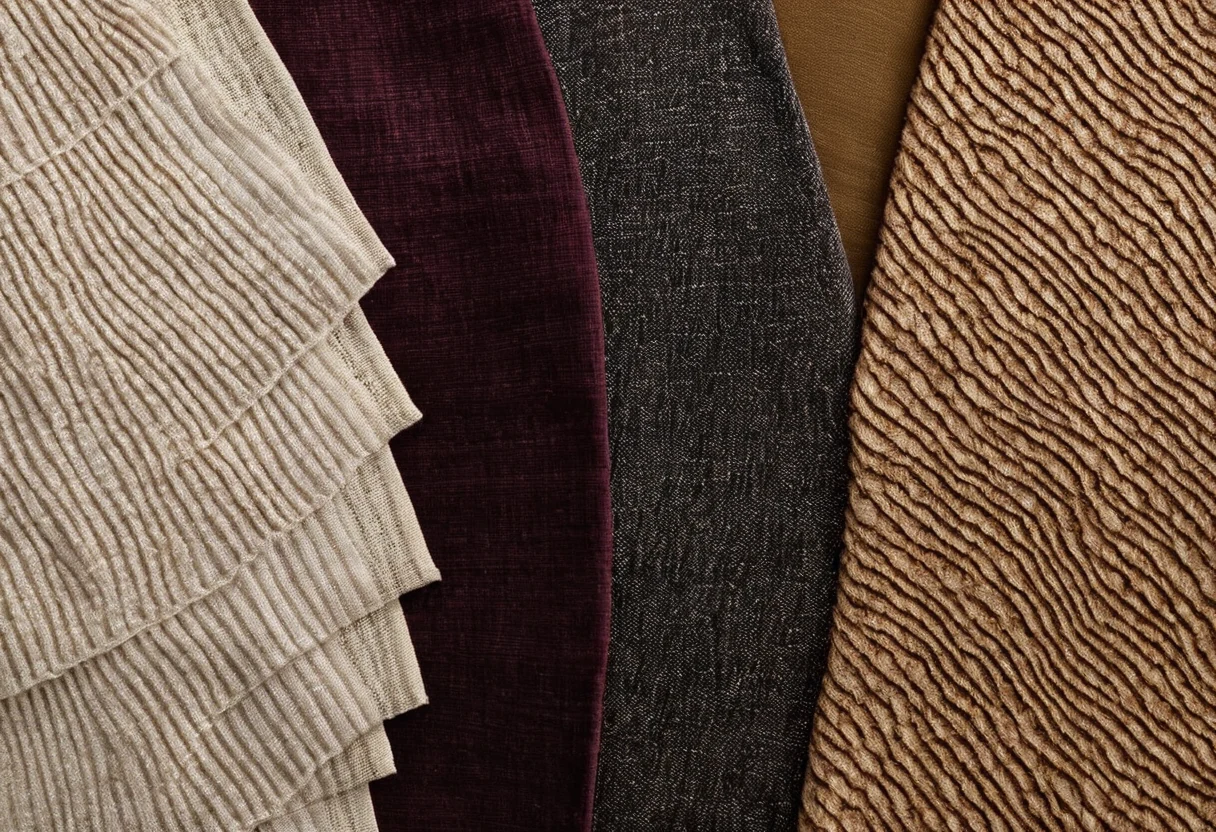
Hand and luster: the category’s reference point: a dry, fine hand with the triangular-fiber shimmer no other material reproduces. Drape: superb, liquid in lightweight weaves. Abrasion: the honest number is low: pure silk upholstery typically rates 10,000 to 15,000 rubs, occasional-chair territory. Light: silk’s defining weakness: ultraviolet degrades the protein fiber, and unlined silk drapery in strong sun can shatter (the trade’s word for fibers breaking along folds) within a few years; blue wool performance is poor without protection. Care: specialist dry cleaning; water spots. Price: roughly €100 to €400 per meter for upholstery grades. Best use: lined and interlined curtains away from harsh exposure, cushions, headboards, low-use occasional seating, places where the eye gets silk and the sun does not.
Linen: The Honest One That Refuses to Be Ironed
Hand and luster: dry, crisp, cool, with the slubbed irregularity that signals natural origin at a glance. Drape: heavy and relaxed; linen curtains hang in deep architectural folds. Abrasion: moderate, typically 15,000 to 25,000 rubs in upholstery weights. Light: good resistance for a natural fiber (commonly blue wool 5-6 in quality qualities). Care: washable in many constructions; creases as a lifestyle, not a defect. Price: €40 to €150 per meter. Best use: relaxed sofas and slipcovers, summer-house seating, curtains where the brief says “natural and unfussy” and means it.
Wool: The Quiet Professional That Outlives Trends and Fires
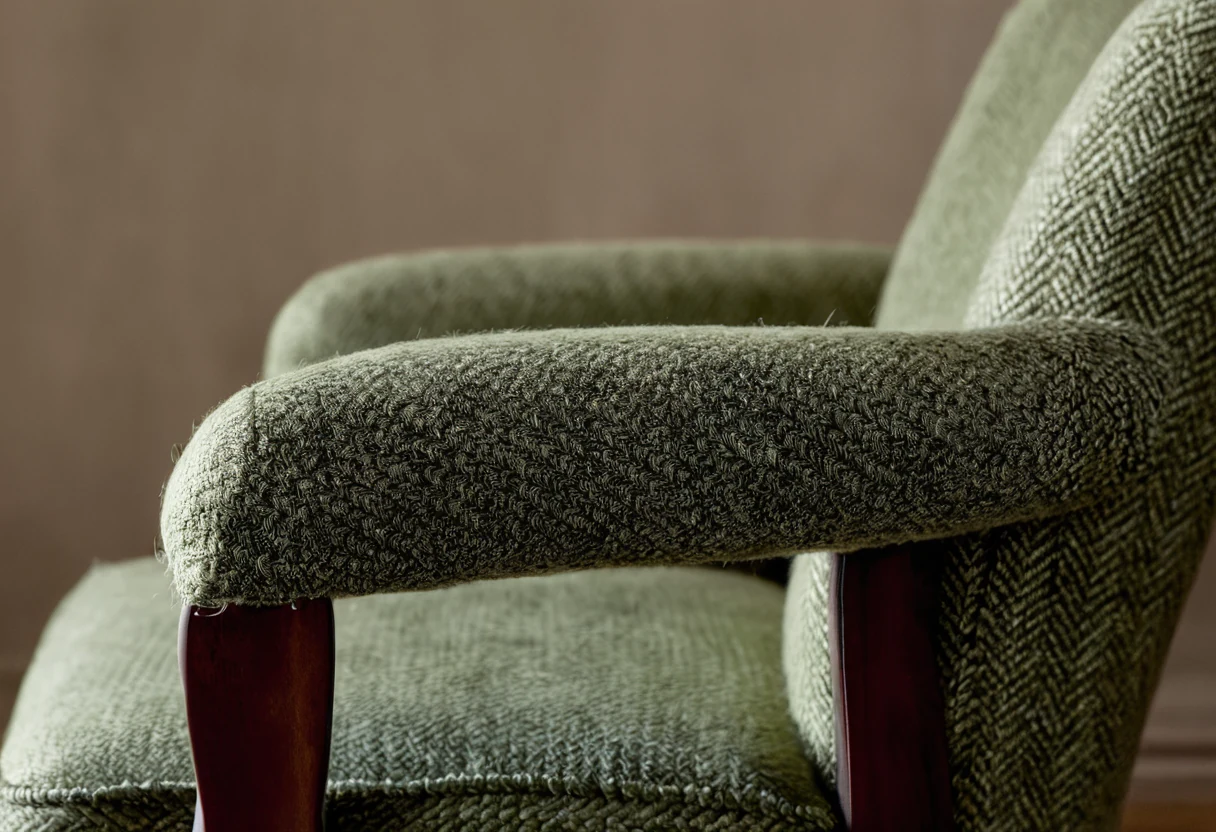
Hand and luster: matte, warm, springy; wool reads as substance rather than shine. Drape: excellent in suiting-weight drapery; upholstery weights sit firm and recover. Abrasion: the workhorse numbers: worsted wool upholstery commonly rates 30,000 to 50,000+ rubs, and the fiber’s natural crimp keeps recovering from compression where flat fibers crush. Light: good (5-6). Fire: wool’s superpower: the fiber is inherently flame-resistant, chars rather than melts, and self-extinguishes, the reason wool dominates aviation and high-spec hospitality seating. Care: professional cleaning; moth protection in storage. Price: €60 to €200 per meter. Best use: hotel lobbies, family sofas, dining seating, anywhere the brief contains the words “every day for fifteen years.”
Cotton: The Versatile Middleweight
Hand and luster: soft, familiar, matte to gently lustrous in sateens. Drape: good across weights. Abrasion: construction-dependent: 15,000 to 30,000 rubs, with tight weaves at the top. Light: moderate (4-5); prints fade before plains. Care: the easiest natural fiber, frequently washable. Price: €20 to €100 per meter. Best use: printed decorative schemes, slipcovers, bedrooms, linings; the fiber that carries pattern affordably and accepts replacement without grief.
Viscose: The Beautiful Liar of the Sample Book
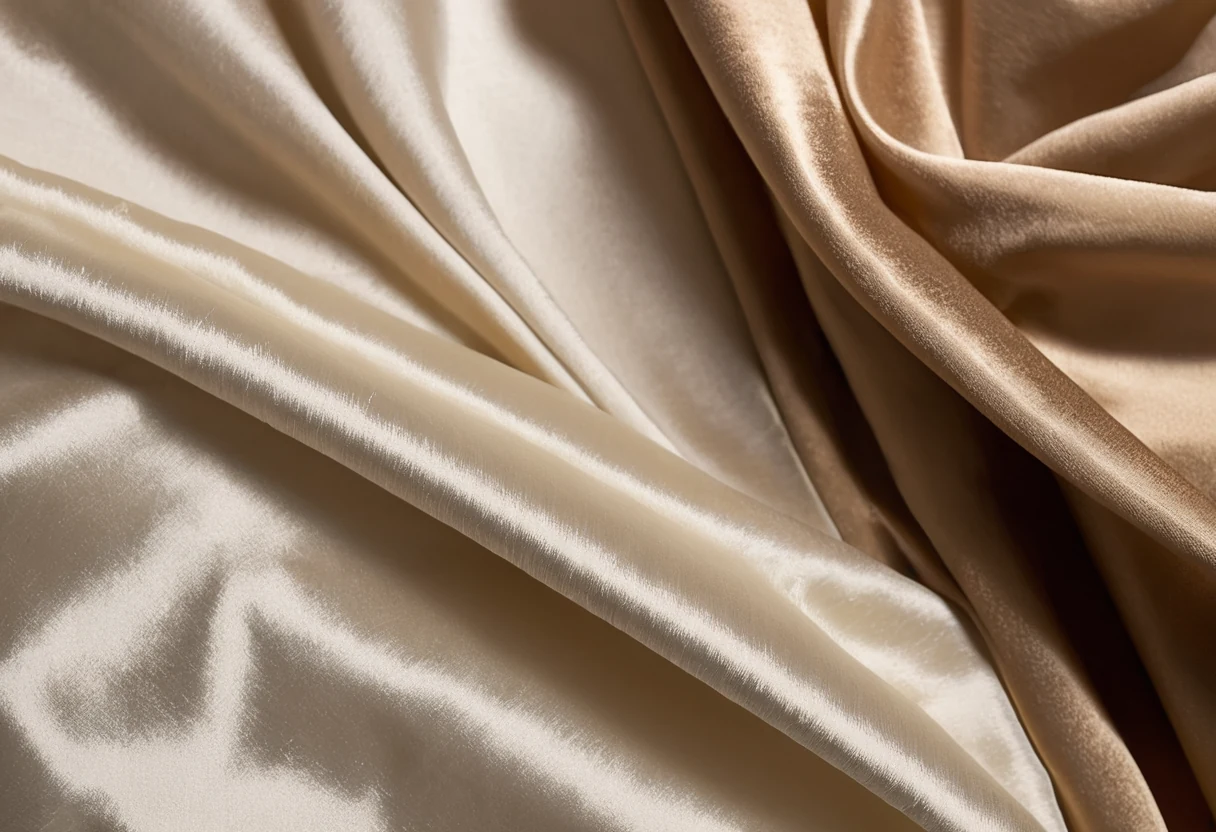
Hand and luster: the silk impersonator: viscose (regenerated cellulose) delivers liquid luster and saturated color at a fraction of silk’s price. Drape: heavy and fluid. The honest part: viscose loses up to half its strength when wet, water-marks readily, and viscose-pile velvets develop permanent seat-shaped crush marks that no steaming fully reverses; abrasion in pure form runs a modest 10,000 to 20,000 rubs. Light: moderate (4-5). Care: strictly professional; never home-wet-cleaned. Price: €30 to €120 per meter. Best use: the sheen ingredient in blends, decorative cushions, formal low-use pieces, and any application where beauty outranks biography.
Synthetics and Blends: The Unsentimental Workhorses
Hand and luster: engineered to order, from linen-look to velvet; the best current polyesters fool most hands, the worst still feel like packaging. Abrasion: the category’s trump card: 40,000 to 100,000+ rubs routinely. Light: excellent (6-7); solution-dyed fibers barely fade. Fire: inherently flame-retardant variants (modacrylics, FR polyesters such as Trevira CS) carry hospitality certifications in the fiber itself. Care: forgiving, frequently bleach-cleanable in performance constructions. Price: €15 to €80 per meter. The honest part: low-grade synthetics pill, shine at wear points and date a room faster than any natural fiber ages it. Best use: contract seating, outdoor lines, family pieces under heavy duty, and blends where 20 to 40 percent synthetic content quietly doubles a natural face fiber’s life.
The Six Fibers, One Table
| Fiber | Hand / luster | Martindale (typical) | Light (blue wool) | Price €/m | Failure mode |
|---|---|---|---|---|---|
| Silk | Fine, liquid shimmer | 10-15k | poor unlined | 100-400 | UV shattering, water spots |
| Linen | Dry, crisp, slubbed | 15-25k | 5-6 | 40-150 | Creasing, abrasion mid-grade |
| Wool | Matte, springy | 30-50k+ | 5-6 | 60-200 | Moths in storage |
| Cotton | Soft, familiar | 15-30k | 4-5 | 20-100 | Fading prints, creasing |
| Viscose | Silk-like luster | 10-20k | 4-5 | 30-120 | Wet weakness, pile crush |
| Synthetics/blends | Engineered to order | 40-100k+ | 6-7 | 15-80 | Pilling, wear-point shine |
Five Ready Recipes for Real Briefs
- Curtains on a south-facing window: linen or a linen-polyester blend at blue wool 5+, always lined and ideally interlined; silk only as an inner decorative layer. The lining is the sunscreen; the interlining is the body.
- Sofa in a house with children and a dog: wool blend or performance polyester at 40,000+ rubs, mid-tone color or small pattern, removable covers. Specify the cleaning code in writing before choosing the color.
- Hotel lobby seating: wool or wool-nylon at 50,000+ rubs with the project’s fire certification (the fiber-inherent route saves re-treatment cycles), in soil-tolerant mid-values. Beauty that cannot survive a conference week is a liability, not a look.
- The fireside armchair: wool or mohair velvet: warm hand, natural flame resistance, pile that recovers. The one chair where fiber romance and fire physics agree completely.
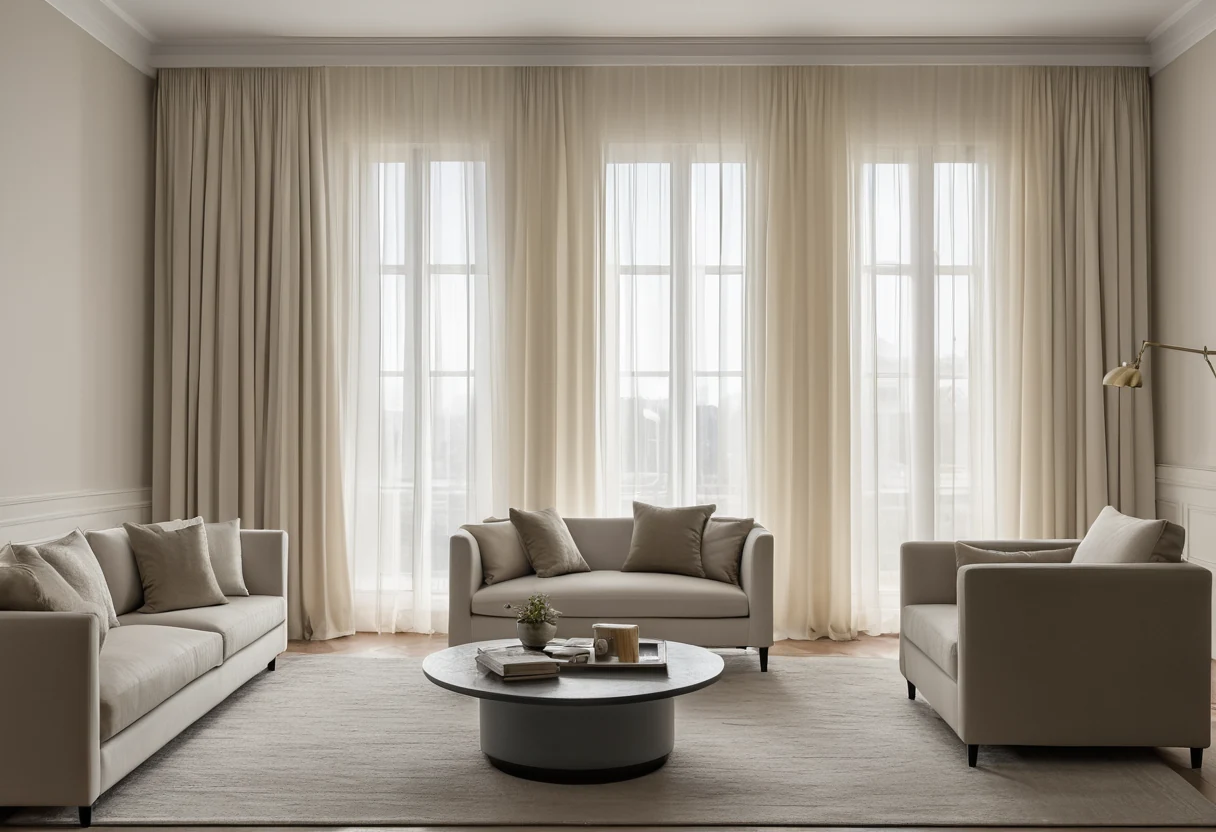
- Sheers across panoramic glazing: 40 to 80 g/m² in linen-look polyester or inherently FR Trevira-class fiber for contract settings: sun-fast whites, stable hems at 6-meter drops, and dimensional behavior plain linen cannot promise at that scale. How a mill weaves these qualities is its own subject; published fabric production methods show where sheer stability is actually made.
The guide’s single transferable rule: ask every fabric two questions, what will touch it and what will shine on it, then read the Martindale and blue wool numbers before the price. Fibers do not lie; sample books simply wait to be asked.